Corners
Most of us sleep in a rectangular bed, located in a rectangular room, within a rectangular building, situated on a rectangular grid of streets. Corners that form such rectangles dominate our lives – from crib to coffin. Geometricians may describe a corner simply as the joining of two flat planes. Their appreciation of this form would be enriched by highlighting the multifaceted role of corners in constructing our aesthetic and emotional environment.
Consider this – a corner is the minimum construction needed to produce a three-dimensional space. It is also a minimal spatial relationship affecting our behavior and our mood. Thus, corners introduce such fundamental forms of human awareness as contrast and similarity, such elemental aesthetic conditions as harmony and tension, and such basic emotions as surprise and expectation.
The following diagrams reveal six possibilities for human interaction with a physical corner:
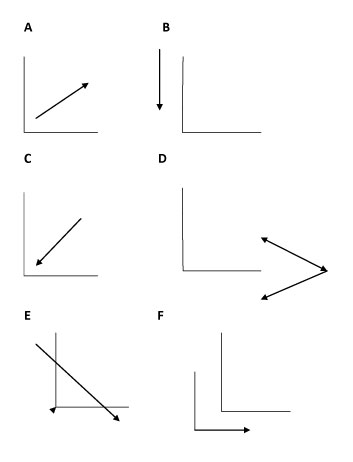
The following list identifies six common phrases in which “corner” appears as a metaphor. Each phrase is correlated with one of the six diagrammed interactions. These phrases reveal the power of corners to establish a spatial condition that generates a behavioral interaction that produces a psychological response:
A. You’ve got something “cornered”. – The enclosed space is your assurance of being safe and in control
B. What lies around the “corner”? Anticipation, curiosity, uncertainty are elicited by approaching the intersection of two right-angled walls from the outside.
C. You’ve got me “cornered”! You feel locked up, fenced in, shut up, trapped.
D. Feeling your way around the “corner”. The inside corner offers comfort and security. The outside corner provides freedom and excitement.
E. You want to cut “corners”. The prescribed route is too long, slow, and difficult.
F. Thankfully you turned the “corner”. A troublesome situation will soon be resolved